Baby-Led Weaning: A Month-by-Month Starter Guide for New Moms
What Is Baby-Led Weaning (and Why You Should Try It)
If you have been pureeing everything in sight and wondering whether there is another way, let me introduce you to baby-led weaning (BLW). In its simplest form, BLW means skipping traditional spoon-fed purees and letting your baby feed themselves real, whole foods from the very start of their solid-food journey.
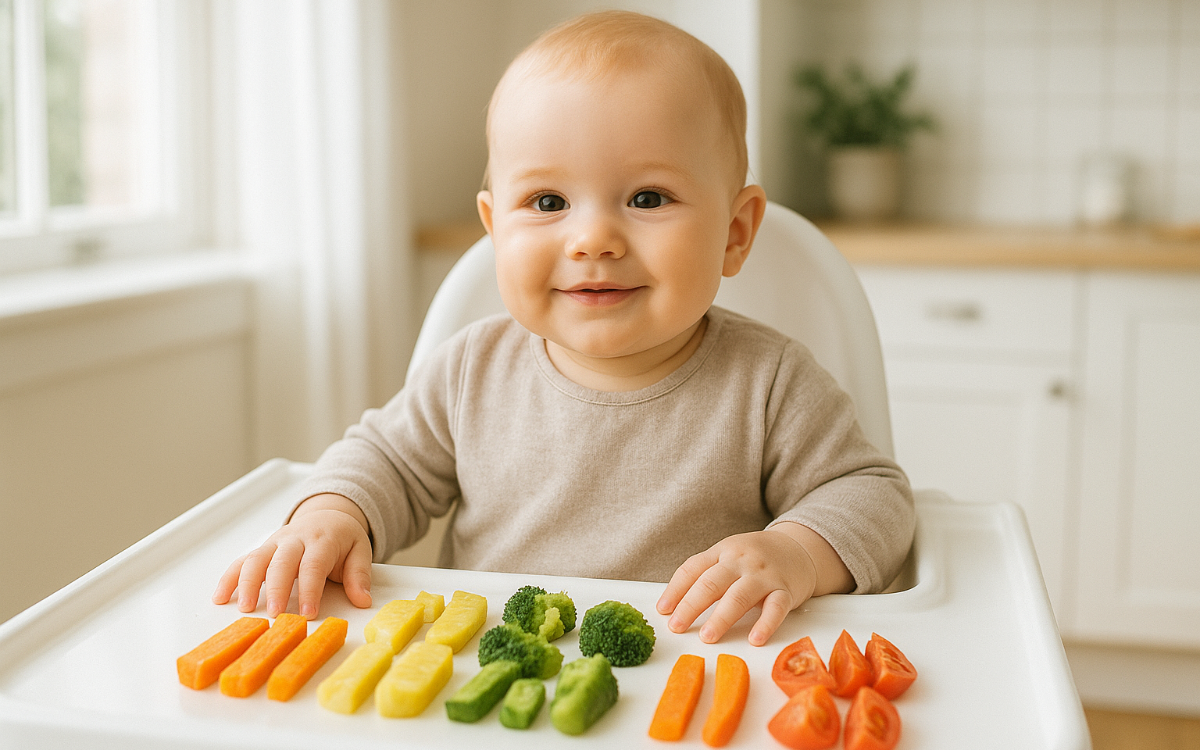
Sounds a little wild, right? I thought so too. But here is the truth: babies are far more capable than we give them credit for. When you hand a six-month-old a soft stick of sweet potato and watch them bring it to their mouth, explore the texture, taste something brand new, and beam at you with orange-smeared cheeks, it is one of the most rewarding milestones you will witness.
Yes, it is messy. Gloriously, hilariously messy. But it is not scary, and it is not dangerous when you follow a few key guidelines. This guide will walk you through everything you need to know, month by month, from first tastes at six months all the way to self-feeding confidence around baby's first birthday.
Before You Start: Signs of Readiness
Most pediatric guidelines recommend starting solids around six months of age, but age alone is not the only factor. Your baby should also be showing these four developmental signs of readiness:
- Can sit upright with minimal support. Your baby needs good head and trunk control to eat safely. They do not have to sit perfectly unsupported, but they should be stable in a high chair without slumping.
- Has lost the tongue-thrust reflex. This is the reflex that causes young babies to push food out of their mouths with their tongue. When it fades, your baby can actually move food to the back of their mouth and swallow.
- Shows genuine interest in food. Watching you eat, reaching for your plate, opening their mouth when they see food coming toward them --- these are all great signs.
- Can grasp objects and bring them to their mouth. BLW relies on your baby picking up food themselves, so this motor skill is essential.
If your baby is not ticking all four boxes yet, that is completely okay. Give it a few more weeks and revisit. There is no rush.
Essential Gear for Baby-Led Weaning
You do not need much to get started, but a few key items will make mealtimes smoother (and cleanup faster).
- A sturdy high chair with a footrest. A supportive high chair is non-negotiable. Look for one that keeps baby upright at a 90-degree angle with feet firmly planted on a footrest. Proper positioning helps with safe swallowing and gives baby stability to use their hands.
- Suction plates and bowls. Plates that stick to the tray are a lifesaver once baby gets past the "sweep everything onto the floor" phase. Silicone suction plates with divided sections work especially well.
- Long-sleeve silicone bibs with a catch pocket. Fabric bibs will not survive BLW. Silicone bibs with a wide pocket at the bottom catch falling food and wipe clean in seconds.
- A splash mat for under the high chair. Save your floors (and your sanity). A waterproof splash mat catches what the bib misses. Some parents use a cheap plastic tablecloth or even an old shower curtain --- whatever works for you.
Your Month-by-Month BLW Guide
Month 6: First Tastes
Welcome to the beginning. This month is all about exploration, not nutrition. Breast milk or formula remains your baby's primary source of calories and nutrients. Solid food right now is sensory play with a purpose.
What to offer:
- Soft steamed sticks of sweet potato (about the length and width of your finger)
- Ripe avocado slices (roll them in a little baby cereal or hemp seeds if they are too slippery)
- Banana spears (cut in half lengthwise, leave some peel on for grip)
- Steamed broccoli florets (the "handle" of the stem makes them perfect for tiny fists)
Tips for this month:
- Offer food after a milk feed, not before. You want baby relaxed and curious, not starving.
- Expect most food to end up on the floor, in their hair, or squished between their fingers. That is exactly right.
- Let baby set the pace. Some days they will devour a whole banana spear. Other days they will lick one piece and throw the rest. Both are normal.
- Always stay seated with your baby during meals. Never leave them unattended with food.
Month 7: Building Confidence
By now, your baby is getting the hang of bringing food to their mouth with more intention. You will notice their grip improving and their willingness to try new textures growing.
What to offer:
- Soft ripe fruits like mango strips, peach slices, or steamed pear wedges
- Well-cooked pasta shapes (fusilli is easy to grip; penne works well too)
- Toast strips with a thin spread of nut butter (if you have cleared allergies with your pediatrician)
- Steamed carrot sticks, zucchini, and butternut squash
- Egg strips (fully cooked scrambled egg cut into fingers)
Tips for this month:
- Start introducing a wider variety of flavors and colors. Babies are naturally open to new tastes at this age, so take advantage of it.
- Offer iron-rich foods regularly. Iron stores from birth begin to decline around six months, so foods like egg yolk, well-cooked lentils, and fortified cereals become important.
- Keep pieces large enough for baby to hold in their fist with some sticking out the top. Think finger-length strips.
Months 8--9: Texture Progression
This is where things get exciting. Around eight to nine months, most babies develop their pincer grasp --- the ability to pick up small items between their thumb and forefinger. This opens up a whole new world of foods.
What to offer:
- Smaller pieces of soft food (pea-sized or small cubes of steamed vegetables)
- Pincer grasp foods like blueberries (quartered), cooked chickpeas (smashed slightly), small pieces of cheese
- Proteins: shredded chicken, flaked fish (check carefully for bones), well-cooked ground meat, small strips of tender beef
- Soft grains: rice, quinoa, small pieces of soft flatbread
- Nut butter mixed into oatmeal or spread thinly on toast
Tips for this month:
- You can start making pieces smaller as baby's pincer grasp develops, but continue to make sure everything is soft enough to squish between your fingers. If you cannot mash it easily, baby cannot chew it safely.
- Meals may start to become more structured. Many families settle into a pattern of two to three solid meals a day by nine months, alongside regular milk feeds.
- Let your baby practice drinking water from an open cup or straw cup during meals.
Months 10--12: Self-Feeding Mastery
Your baby is becoming a real little eater now. By ten to twelve months, many BLW babies are eating modified versions of whatever the rest of the family is having.
What to offer:
- Family meals, adapted to be baby-safe (served before adding salt or strong seasonings to the family pot)
- More complex textures: toast with toppings, small sandwiches, pancakes, meatballs
- Mixed dishes like mild curry with rice, pasta with vegetable sauce, stew with soft chunks
- A wider range of fruits, including some firmer options cut into safe sizes
Tips for this month:
- Introduce pre-loaded spoons and forks. Load the utensil yourself and set it on the tray for baby to pick up. They will not be proficient right away, but the practice matters.
- Continue to offer a variety of textures and flavors. Research suggests that the variety of foods offered in the first year can influence eating habits for years to come.
- Expect some food refusal. This is developmentally normal and not a sign that something is wrong. Continue offering rejected foods without pressure.
Safety: Gagging vs. Choking
This is the section every new BLW parent needs to read carefully, because understanding the difference between gagging and choking is the single most important thing you can learn before starting.
Gagging is normal and protective. It is your baby's natural reflex to push food forward in their mouth when a piece is too large to swallow. Gagging looks dramatic --- baby may cough, sputter, their eyes may water, and they might even retch. But if they are making noise and their face has color, they are handling it. Let them work through it. Gagging happens frequently in the early weeks and decreases as baby learns to manage food in their mouth.
Choking is silent and dangerous. A choking baby cannot cough, cry, or make noise. Their airway is blocked. Their face may turn blue or very pale. This is a medical emergency.
What to do:
- Before starting BLW, take an infant CPR and choking first-aid course. Many hospitals, fire stations, and organizations offer free or low-cost classes, and there are reputable video courses available online. This is not optional --- it is essential.
- Always supervise every single meal.
- Make sure baby is seated upright, never reclined.
- Never offer food in a car seat or stroller.
- Cut round foods (grapes, cherry tomatoes, sausages) lengthwise, never into round coins.
Foods to Avoid Before 12 Months
While BLW encourages variety, certain foods should be kept off the menu during baby's first year:
- Honey --- Risk of infant botulism. Not safe in any form before 12 months.
- Whole nuts and seeds --- A serious choking hazard. Nut and seed butters spread thinly or mixed into foods are fine (and a great way to introduce allergens early).
- Cow's milk as a main drink --- Small amounts in cooking or mixed into foods are okay, but cow's milk should not replace breast milk or formula as a primary drink before 12 months.
- Added salt and sugar --- Baby's kidneys cannot process excess sodium, and added sugar offers no nutritional benefit. Season food with herbs and spices instead.
- Round, firm foods --- Whole grapes, whole cherry tomatoes, whole blueberries, popcorn, raw carrot coins, hot dog rounds. Always cut these foods into safe shapes (quartered or in strips).
Key Takeaways
- Wait for all four signs of readiness before starting BLW, typically around six months.
- Start with soft, finger-length strips and progress to smaller pieces as baby's pincer grasp develops.
- Food before one is just for fun --- breast milk or formula remains the primary nutrition source throughout the first year.
- Gagging is normal. Choking is not. Learn the difference and take an infant first-aid course before you begin.
- Embrace the mess. It is temporary. The confidence and healthy relationship with food your baby is building will last much longer than the stains on your kitchen floor.
- Offer variety early and often. The first year is a golden window for developing adventurous eating habits.
You are doing an incredible job, mama. Every meal --- even the ones that end up entirely on the floor --- is a step forward. Trust your baby, trust yourself, and enjoy the ride.
Disclaimer
This article is for informational and educational purposes only and is not a substitute for professional medical advice, diagnosis, or treatment. Always consult your pediatrician or a qualified healthcare provider before starting solid foods or making changes to your baby's diet. Every baby is different, and your child's doctor is the best resource for guidance tailored to their individual needs.
LittleNestMama may earn a small commission from qualifying purchases made through affiliate links on this site, at no additional cost to you. We only recommend products we genuinely believe in.