The Gentle Sleep Guide: Science-Backed Tips for Baby Sleep (0–12 Months)
Introduction
Let me start with something you probably already know but need to hear anyway: sleep deprivation is one of the hardest parts of early parenthood. It is relentless. It affects your mood, your patience, your relationships, and your ability to remember where you put your coffee (it is in the microwave — again). You are not failing. You are not broken. And neither is your baby.
If you have spent any time searching for sleep advice online, you have likely been hit with two extremes: the "let them cry it out and they will learn" camp and the "never put your baby down or you will ruin attachment forever" camp. Here is the truth — there is a wide, evidence-based middle ground, and that is exactly where this guide lives.
This is not about rigid schedules or watching the clock with military precision. This is about understanding how your baby's sleep actually works from a biological standpoint, meeting them where they are developmentally, and gently guiding them toward healthy sleep habits at a pace that feels right for your family.
Every baby is different. Every family is different. What works beautifully for your neighbor's baby might be a disaster for yours. Take what resonates, leave what does not, and trust your instincts. You know your baby better than any guide ever could.
Understanding Baby Sleep: The Basics
Before we dive into age-specific strategies, it helps to understand why baby sleep looks so different from adult sleep. This is not a design flaw — it is biology doing exactly what it is supposed to do.
Here is what is happening in your baby's brain at night:
- Shorter sleep cycles. Adult sleep cycles run roughly 90 minutes. Baby sleep cycles are about 50 minutes long. That means more transitions between light and deep sleep, and more opportunities to wake up.
- REM-heavy sleep. Babies spend about 50% of their sleep in REM (active sleep), compared to roughly 20-25% for adults. REM sleep is critical for brain development — it is when neural connections are being built at an astonishing rate. But REM sleep is also lighter and more easily disrupted.
- Biologically normal waking. Frequent night waking in the first year is not a sleep problem — it is a survival mechanism. Babies wake to feed, to regulate body temperature, and to ensure a caregiver is nearby. Research published in Pediatrics and Developmental Psychology consistently shows that night waking in infancy is normal and does not predict sleep problems later in childhood.
- Circadian rhythm development. Newborns do not have a functioning circadian rhythm. It begins developing around 6-8 weeks and is not fully established until closer to 4-6 months. This is why newborns do not distinguish between day and night.
Understanding these basics takes a huge weight off your shoulders. Your baby is not giving you a hard time — they are having a hard time. And that reframes everything.
Newborn Phase (0-3 Months): Survival Mode
Let me be direct: there is no such thing as a sleep schedule for a newborn. Anyone telling you otherwise is selling something. The first three months are about survival — yours and theirs.
What to expect:
- Sleeping 14-17 hours total in a 24-hour period, but in unpredictable stretches
- Wake windows of only 45-90 minutes (including feeding time)
- Frequent night feeds — newborn stomachs are tiny, roughly the size of a walnut by week one
- Day/night confusion for the first several weeks
What actually helps:
- Follow your baby's cues, not the clock. Yawning, eye rubbing, fussiness, staring into the distance — these are your signals. Catching the sleep window early makes everything easier.
- Address day/night confusion. During the day, keep things bright and stimulating. Expose your baby to natural daylight. At night, keep lights dim, interactions quiet and boring, and diaper changes as quick and low-key as possible.
- Practice safe sleep from day one. The ABCs of safe sleep are non-negotiable:
- A — Alone. Baby sleeps on their own surface, not sharing a bed with adults or siblings.
- B — Back. Always place baby on their back to sleep. Every sleep, every time.
- C — Crib. A firm, flat surface with a fitted sheet and nothing else. No blankets, no pillows, no bumpers, no stuffed animals.
The American Academy of Pediatrics (AAP) safe sleep guidelines are clear and evidence-based. Following them significantly reduces the risk of SIDS and sleep-related infant deaths.
The most important thing in this phase: be kind to yourself. Sleep in shifts with your partner if you can. Accept help. Lower every standard that is not safety-related. The dishes can wait.
The Fourth Trimester Toolkit
Dr. Harvey Karp popularized the concept of the "fourth trimester" — the idea that babies are born about three months too early and crave womb-like conditions. Whether or not you subscribe to the full theory, these soothing techniques are backed by research and endorsed by pediatricians:
- Swaddling. Mimics the snug feeling of the womb and reduces the startle (Moro) reflex that wakes babies. Use a proper swaddle sack or learn a secure technique. Stop swaddling as soon as your baby shows signs of rolling — typically around 8-12 weeks.
- White noise. The womb is loud — roughly 80-90 decibels, similar to a vacuum cleaner. A white noise machine set at a safe volume (under 50 dB at the crib) and placed across the room can work wonders. Studies show it helps babies fall asleep faster and stay asleep longer.
- Gentle rocking and motion. Rhythmic movement activates the calming reflex. Rocking, swaying, bouncing on a yoga ball — all are effective. You are not creating bad habits. You are meeting a biological need.
- Pacifier. The AAP actually recommends offering a pacifier at sleep time, as it has been associated with a reduced risk of SIDS. If your baby does not take one, do not force it.
- Skin-to-skin contact. This regulates baby's heart rate, breathing, temperature, and stress hormones. It boosts oxytocin in both parent and baby. It is one of the most powerful tools you have, and it costs nothing.
These are not crutches. They are developmentally appropriate responses to your baby's needs. Use them freely and without guilt.
Months 3-6: Emerging Patterns
Around three months, something magical starts to happen: patterns begin to emerge. Your baby's circadian rhythm is coming online, melatonin production kicks in, and you might start noticing more predictable stretches of sleep.
This is when you can gently start laying the groundwork for healthy sleep habits — not through rigid training, but through consistency and environment.
Key strategies for this phase:
-
Introduce "drowsy but awake." This is the most misunderstood phrase in all of baby sleep. It does not mean putting a wide-awake baby in the crib and walking away. It means doing most of the soothing work (feeding, rocking, singing) and then placing your baby in the crib when they are calm and sleepy but not fully asleep. It will not work every time. That is completely fine. Think of it as practice, not a pass/fail test.
-
Establish a bedtime routine. Research consistently shows that a predictable bedtime routine improves sleep outcomes in infants and toddlers. It does not need to be elaborate. A simple sequence works beautifully:
- Bath (warm, calming, signals the transition)
- Book (even at this age, the sound of your voice is soothing)
- Feed (a full feeding helps extend that first sleep stretch)
- Song or lullaby (consistency is the key here — same song every night)
-
Learn wake windows. At 3-6 months, most babies do well with wake windows of about 1.5 to 2.5 hours. An overtired baby is paradoxically harder to get to sleep, not easier. Watching the clock and your baby's cues together gives you the best results.
-
Let the nap schedule be flexible. Three to four naps per day is typical. They will be different lengths. The last nap of the day is often short — a "catnap" that bridges the gap to bedtime. Do not stress about it.
Months 6-9: The Regression Zone
Just when you thought you had things figured out, the 4-month sleep regression arrives (yes, it often hits closer to 3.5-4 months, but its effects can ripple well into month 6). Here is what is going on:
- Your baby's sleep architecture is permanently reorganizing. They are transitioning from two sleep stages to four — the same structure adults have. This is a one-time neurological shift, not a behavioral problem.
- Teething may begin. The discomfort is real and can absolutely disrupt sleep. Cold teething rings, infant-appropriate pain relief (consult your pediatrician), and extra comfort are all warranted.
- Separation anxiety emerges. Around 6-8 months, babies develop object permanence — the understanding that you still exist when you leave the room. This is a cognitive milestone, but it can make bedtime harder.
Gentle approaches that help during this phase:
- Pick Up / Put Down. When your baby cries, you pick them up and soothe them. When they calm down, you put them back in the crib. Repeat as needed. It is labor-intensive but responsive, and many families find it effective over the course of one to two weeks.
- The Chair Method. Sit in a chair next to the crib while your baby falls asleep. Every few nights, move the chair a little farther from the crib until you are eventually outside the room. This gradual withdrawal gives your baby the security of your presence while slowly building independence.
- Stay consistent through the regression. The worst thing you can do during a regression is panic and change everything. Keep your routines steady. The regression will pass — typically within 2-6 weeks.
Remember: regressions are actually progressions. Your baby's brain is leveling up. It is messy and exhausting, but it means development is happening exactly as it should.
Months 9-12: Building Independence
By now, your baby is likely on a more predictable schedule, and you can see the light at the end of the tunnel (even if it flickers sometimes).
What is typical at this stage:
- Consolidating to two naps per day. The transition from three naps to two usually happens between 6-9 months. You will know it is time when the third nap becomes a consistent battle or starts pushing bedtime too late.
- Longer stretches of night sleep. Many (not all) babies are capable of sleeping 10-12 hours overnight by this age, sometimes with one feeding. "Sleeping through the night" is defined in research as a 5-hour stretch — not the 8-hour adult version. Adjust your expectations accordingly.
- Standing in the crib. Your baby has learned to pull up but may not know how to get back down. This leads to the classic "standing and crying at 2 AM" scenario. Practice sitting down from standing during the day — at the couch, at a play table, repeatedly. They will figure it out.
- Bedtime battles may resurface. At 8-10 months, another wave of separation anxiety can hit. Your consistent routine is your anchor. Do not abandon it.
Tips for this phase:
- Keep bedtime consistent — within the same 30-minute window every night
- A comfort object (a small lovey) can be introduced after 12 months per AAP guidelines; some pediatricians approve earlier — ask yours
- Make the last wake window of the day the longest one
- Do not skip naps hoping baby will sleep better at night — overtiredness almost always backfires
The Sleep Environment Checklist
Your baby's sleep environment matters more than almost any sleep strategy. Here is what the research supports:
- Temperature: 68-72 degrees F (20-22 degrees C). Overheating is a risk factor for SIDS. Dress baby in one layer more than you would wear comfortably. A sleep sack is an excellent option.
- Darkness. Melatonin production is triggered by darkness. Use blackout curtains or shades for naps and nighttime. A dim red or warm-toned nightlight is fine for middle-of-the-night feeds.
- White noise. Consistent, low-frequency white noise (think "shhh" sound, not sharp static) placed at least 7 feet from the crib at a safe volume.
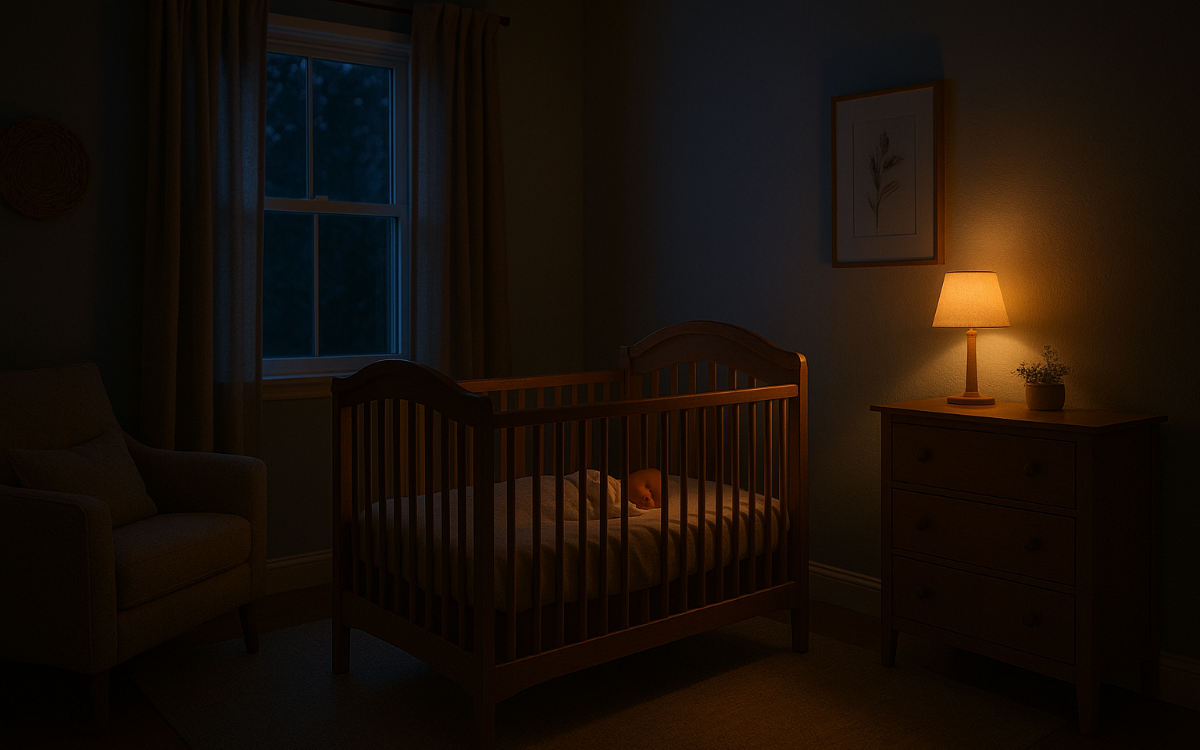
- Safe crib setup. Firm mattress, fitted sheet, and absolutely nothing else. No blankets, pillows, bumpers, positioners, or loose items of any kind.
What to avoid:
- Weighted sleep sacks or weighted swaddles (the AAP advises against these)
- Inclined sleepers and rockers for unsupervised sleep (these have been recalled due to safety concerns)
- Crib bumpers of any kind, including mesh (the risk outweighs any perceived benefit)
- Loose blankets before 12 months
- Overheating — check the back of baby's neck, not hands or feet, to gauge temperature
When to Seek Help
Most baby sleep challenges are developmentally normal and resolve with time, consistency, and patience. However, contact your pediatrician if you notice:
- Loud, persistent snoring or gasping during sleep — this could indicate obstructive sleep apnea, which occurs in infants more often than people realize
- Consistently short sleep stretches (under 30 minutes) with no improvement despite environmental adjustments, beyond the newborn phase
- Excessive daytime sleepiness that seems unusual even for a baby
- Difficulty breathing during sleep — nostril flaring, chest retractions, or pauses in breathing
- Significant feeding difficulties that are impacting weight gain and sleep
- Your own mental health is suffering. Postpartum depression and anxiety are common, real, and treatable. Sleep deprivation makes both worse. Asking for help is not weakness — it is wisdom.
Trust your gut. If something feels wrong, it is always worth a call to your pediatrician. You will never be judged for being cautious about your baby's health.
Key Takeaways
- Baby sleep is biologically different from adult sleep. Shorter cycles, more REM, frequent waking — all of it is normal and purposeful.
- There is no one-size-fits-all approach. What works for one family may not work for yours. That is okay.
- Gentle does not mean permissive. You can set healthy boundaries and create structure without leaving your baby to cry alone.
- Consistency is your most powerful tool. Not perfection — consistency. Do the same thing most of the time, and your baby will learn what to expect.
- Regressions are temporary. They feel endless in the moment, but they pass. Stay the course.
- The sleep environment matters enormously. Cool, dark, safe, and boring — that is the recipe.
- You are doing a better job than you think. The fact that you are reading this, trying to learn, trying to do right by your baby — that is everything.
Sleep will come. Not on a perfectly linear trajectory, and not without setbacks, but it will come. Be patient with your baby. Be patient with yourself. And on the really hard nights, remember: this too shall pass.
Disclaimers
This article is for informational purposes only and does not constitute medical advice. The content is based on current evidence-based research and guidelines from organizations including the American Academy of Pediatrics, but it is not a substitute for personalized guidance from your child's pediatrician or a qualified healthcare provider.
Every baby is unique. Developmental timelines, sleep needs, and temperament vary widely. What is described here represents general ranges and common patterns — your baby may differ, and that is perfectly normal.
Always follow the most current safe sleep guidelines from the AAP and discuss any concerns about your baby's sleep, development, or health with your pediatrician. If you are experiencing postpartum depression, anxiety, or severe sleep deprivation that is affecting your ability to function, please reach out to your healthcare provider or a mental health professional.
LittleNestMama may earn a small commission from affiliate links at no additional cost to you. We only recommend products we genuinely trust and believe in. Our editorial content is never influenced by affiliate partnerships.