The Complete Guide to Understanding Your Baby's Sensitive Skin
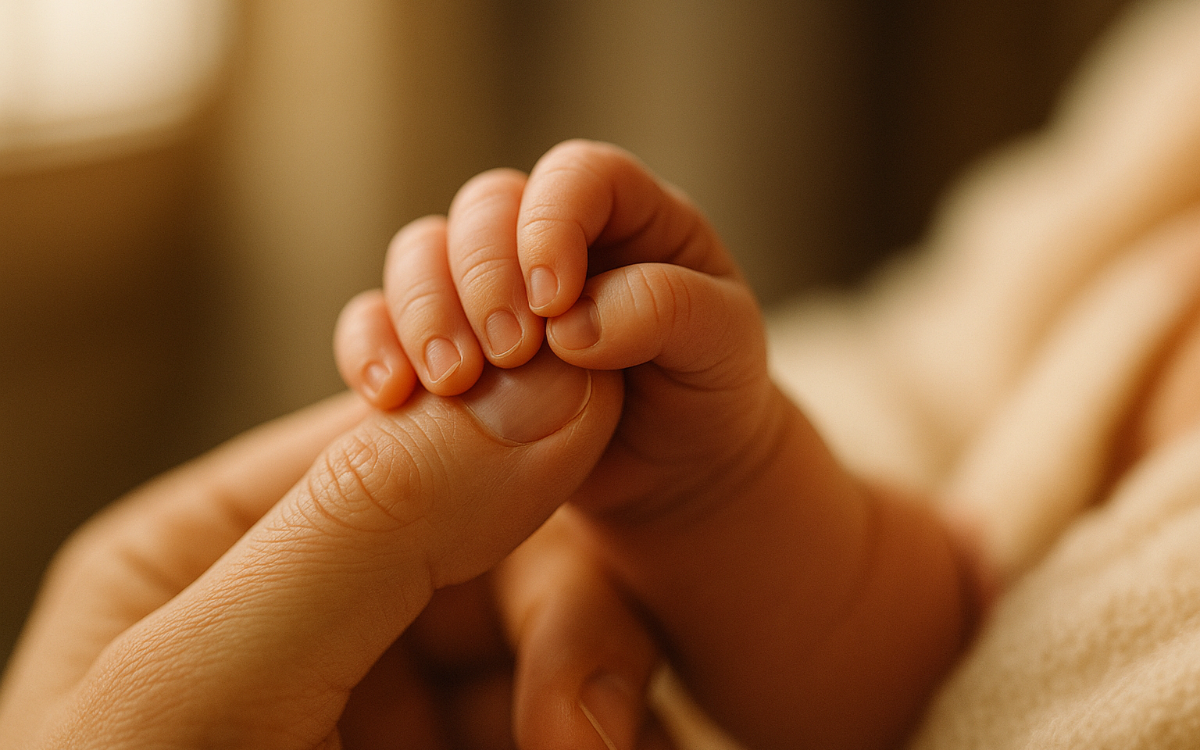
The first time I held my baby, I remember being struck by how impossibly soft her skin felt against mine. It was like touching something made of clouds. And then, almost immediately, the worry kicked in: How do I keep this perfect skin safe?
If you've ever stood in the baby aisle staring at a wall of lotions, washes, and creams wondering which one won't irritate your little one, you're not alone. The truth is, baby skin is fundamentally different from adult skin, and understanding why is the single most powerful thing you can do as a parent to protect it.
Let's break it all down together.
Why Baby Skin Is Different: The Science
You've probably heard that baby skin is "delicate," but that word barely scratches the surface. Here's what's actually going on beneath that velvety exterior:
It's 30% Thinner Than Adult Skin
Your baby's epidermis (the outermost layer of skin) is roughly 30% thinner than yours. Think about that for a moment. The very first line of defense your baby has against the outside world is nearly a third less substantial than what you're working with. This means everything from temperature changes to chemical exposure hits harder and faster.
It Absorbs Substances Faster
Because the skin is thinner, substances applied to the surface are absorbed more readily into the bloodstream. Research published in Pediatric Dermatology has shown that the permeability of infant skin is significantly higher than that of adults, especially in the first year of life. What you put on your baby quite literally gets into your baby more efficiently.
The Barrier Function Is Weaker
A baby's skin barrier doesn't fully mature until around two years of age. Until then, it loses moisture more quickly and is more susceptible to irritants, allergens, and pathogens. This is why babies are so prone to dryness, rashes, and reactions that wouldn't faze an adult.
Higher Surface-Area-to-Body Ratio
Babies have a much larger surface area relative to their body weight compared to adults. This means that a topical product covers proportionally more "territory" on a baby, increasing overall systemic exposure. A dab of lotion on your baby is, proportionally speaking, a much bigger deal than a dab on you.
Immature Immune Response
Your baby's immune system is still learning the ropes. The skin is a critical part of immune defense, and in infants, the immune cells within the skin are not yet fully developed. This makes babies more vulnerable to infections and inflammatory reactions when the skin barrier is compromised.
The takeaway: Baby skin isn't just a smaller version of adult skin. It's structurally and functionally different, and it deserves products and routines designed specifically for its unique needs.
The Skin Barrier: What Parents Need to Know
Dermatologists often describe the skin barrier using the "brick wall" analogy. Imagine your skin cells as the bricks and the lipids (natural fats) between them as the mortar. Together, they form a wall that keeps moisture in and irritants out.
In babies, both the bricks and the mortar are still under construction. The cells are smaller, the lipid layers are thinner, and the whole structure is simply less robust.
What Weakens the Skin Barrier
- Harsh cleansers that strip away natural oils
- Hot water during bath time (lukewarm is always best)
- Over-bathing (two to three times per week is plenty for most newborns)
- Synthetic fragrances and dyes in products
- Dry air and extreme temperatures
- Rough fabrics rubbing against the skin
What Strengthens the Skin Barrier
- Gentle, fragrance-free cleansers with a pH close to 5.5
- Regular moisturizing with barrier-supporting ingredients
- Soft, breathable fabrics like organic cotton
- Humidifiers in dry environments
- Limiting product use to only what's truly necessary
- Allowing natural oils to do their work between baths
Ingredients to Avoid and Ingredients to Embrace
Not all baby products are created equal. The label matters enormously, and once you know what to look for, it becomes second nature.
Red Flag Ingredients
These are the ones I encourage every parent to watch out for:
-
Fragrance (Parfum): This single word can represent dozens of undisclosed chemicals. Synthetic fragrances are one of the most common causes of contact dermatitis in babies. If the label says "fragrance" or "parfum," put it back on the shelf.
-
Phenoxyethanol: A preservative found in many "natural" baby products. While considered safe in low concentrations for adults, some pediatric dermatologists recommend caution with infants due to their higher absorption rates.
-
MIT/CMIT (Methylisothiazolinone / Methylchloroisothiazolinone): Powerful preservatives that have been linked to allergic contact dermatitis. The European Commission has restricted their use in leave-on products, but they still appear in some rinse-off baby washes.
-
SLS/SLES (Sodium Lauryl Sulfate / Sodium Laureth Sulfate): These create that satisfying lather in shampoos and body washes, but they can strip the skin's natural oils and disrupt the already-fragile barrier. Your baby doesn't need bubbles to get clean.
-
Parabens (Methylparaben, Propylparaben, Butylparaben): Used as preservatives, parabens have come under scrutiny for their potential endocrine-disrupting properties. Many brands have moved away from them, but always double-check.
-
Alcohol (Ethanol, Isopropyl Alcohol): Drying alcohols can seriously deplete moisture from baby skin. Note that fatty alcohols like cetearyl alcohol are actually moisturizing and safe -- it's the drying alcohols you want to avoid.
Green Flag Ingredients
These are the ones that make me feel good about a product:
- Purified Water: The simplest and safest base for any baby product.
- Coconut-Derived Cleansers (Coco-Glucoside, Decyl Glucoside): Gentle, plant-based surfactants that clean without stripping.
- Aloe Vera (Aloe Barbadensis): Soothing, hydrating, and anti-inflammatory. A true multitasker.
- Shea Butter (Butyrospermum Parkii): Rich in fatty acids and vitamins, it helps repair and protect the skin barrier.
- Chamomile (Bisabolol, Chamomilla Recutita): Calming and anti-inflammatory, wonderful for irritated skin.
- Vitamin E (Tocopherol): An antioxidant that supports skin healing and helps lock in moisture.
How to Build a Safe Baby Skin Care Routine
Less is more. Truly. Your baby's skin does a remarkable job on its own when we stop over-interfering.
Newborns (0-3 Months)
During the first few months of life, your baby is still coated in the remnants of vernix caseosa, that waxy, protective coating from the womb. Research suggests delaying the first bath by at least 24 hours to let the skin benefit from this natural protection.
Your routine should be minimal:
- Bathe two to three times per week with lukewarm water and a tiny amount of fragrance-free cleanser (or just water alone for the first few weeks).
- Pat dry gently with a soft towel -- never rub.
- Moisturize with a simple, fragrance-free lotion or balm if you notice dry patches. Many newborns don't need any moisturizer at all.
- Diaper area: Clean with water and soft cloths or fragrance-free wipes. Apply a thin layer of barrier cream (zinc oxide or petroleum-based) if redness appears.
Babies (3-12 Months)
As your baby grows, you can gradually introduce a slightly more structured routine, but the principle remains the same: keep it gentle and keep it simple.
- Bathe three to four times per week. Baths can become a bit longer now, but keep water lukewarm and limit sessions to ten minutes.
- Wash hair with a gentle, tear-free baby shampoo once or twice per week.
- Moisturize within three minutes of leaving the bath while skin is still slightly damp. This locks in hydration beautifully.
- Sunscreen is recommended by the AAP for babies over six months when sun avoidance and protective clothing aren't enough. Choose a mineral-based formula with zinc oxide or titanium dioxide.
- Spot-treat any dry patches or mild irritation with a thicker balm or ointment.
The Label Check: A 60-Second Product Evaluation
Before any baby product goes into your cart, run through this quick checklist:
- Flip the bottle. Ingredients are listed in descending order of concentration. The first five ingredients make up the bulk of the product.
- Scan for "fragrance" or "parfum." If you see it, that's a no.
- Look for the red flag ingredients listed above. Even one can be a dealbreaker for sensitive baby skin.
- Check for certifications. Labels like "dermatologist tested," "hypoallergenic," and "pediatrician recommended" offer some reassurance, though they aren't regulated terms. Third-party certifications like NSF or EWG Verified carry more weight.
- Count the ingredients. Fewer is almost always better. If the ingredient list reads like a chemistry textbook, it probably belongs in one.
- Trust your instincts. If a product has a strong scent when you open it, even if the label says "unscented," something is off.
This takes less than a minute and can save you from a night of dealing with an uncomfortable, rashy baby.
Common Skin Conditions in Babies
Even with the gentlest routine, babies can develop skin issues. Most are completely normal and resolve on their own. Here's what to watch for:
Diaper Rash
What it looks like: Red, inflamed skin in the diaper area, sometimes with small bumps or peeling.
What helps: Frequent diaper changes, gentle cleaning, air-drying time, and a generous layer of zinc oxide barrier cream. If it doesn't improve within a few days or looks like it might be a yeast infection (bright red with satellite spots), check in with your pediatrician.
Cradle Cap (Seborrheic Dermatitis)
What it looks like: Yellowish, scaly, crusty patches on the scalp. It can sometimes appear on the eyebrows and behind the ears.
What helps: Gently massage a small amount of natural oil (coconut or olive) into the scalp before bath time, then use a soft-bristled brush to loosen the flakes. It almost always resolves on its own within a few months.
Eczema (Atopic Dermatitis)
What it looks like: Dry, itchy, red patches that may weep or crust over. Common on the cheeks, arms, and legs in babies.
What helps: Consistent moisturizing is the cornerstone of eczema management. Use thick, fragrance-free creams or ointments. Avoid known triggers (certain fabrics, excessive heat, harsh products). If the eczema is persistent or severe, your pediatrician may recommend a medicated cream.
Baby Acne (Neonatal Acne)
What it looks like: Small red or white bumps on the face, usually appearing in the first two to four weeks of life.
What helps: Honestly, not much is needed. Baby acne is caused by maternal hormones still circulating in your baby's system and typically clears up on its own within a few weeks to months. Keep the face clean with water and resist the urge to apply products.
Key Takeaways
- Baby skin is 30% thinner than adult skin, absorbs products faster, and has a weaker barrier. Treat it accordingly.
- The skin barrier is like a brick wall under construction. Protect it by avoiding harsh products, over-bathing, and extreme temperatures.
- Read every label. Avoid fragrance, SLS, parabens, MIT/CMIT, phenoxyethanol, and drying alcohols.
- Embrace simplicity. The best baby skin care routines are short, gentle, and built around a handful of trusted products.
- Most baby skin conditions are normal and temporary. When in doubt, consult your pediatrician.
- Your instincts as a parent are powerful. If a product doesn't feel right, skip it. Your baby's skin will thank you.
A Few Important Notes
This article is for informational and educational purposes only and is not a substitute for professional medical advice. Always consult your pediatrician or a board-certified dermatologist before starting any new skin care routine or treating a skin condition.
LittleNestMama is a participant in affiliate programs. Some links on this site may be affiliate links, meaning we may earn a small commission at no extra cost to you if you make a purchase. We only recommend products we genuinely trust and believe in. Your support helps us continue creating helpful content for parents like you.